
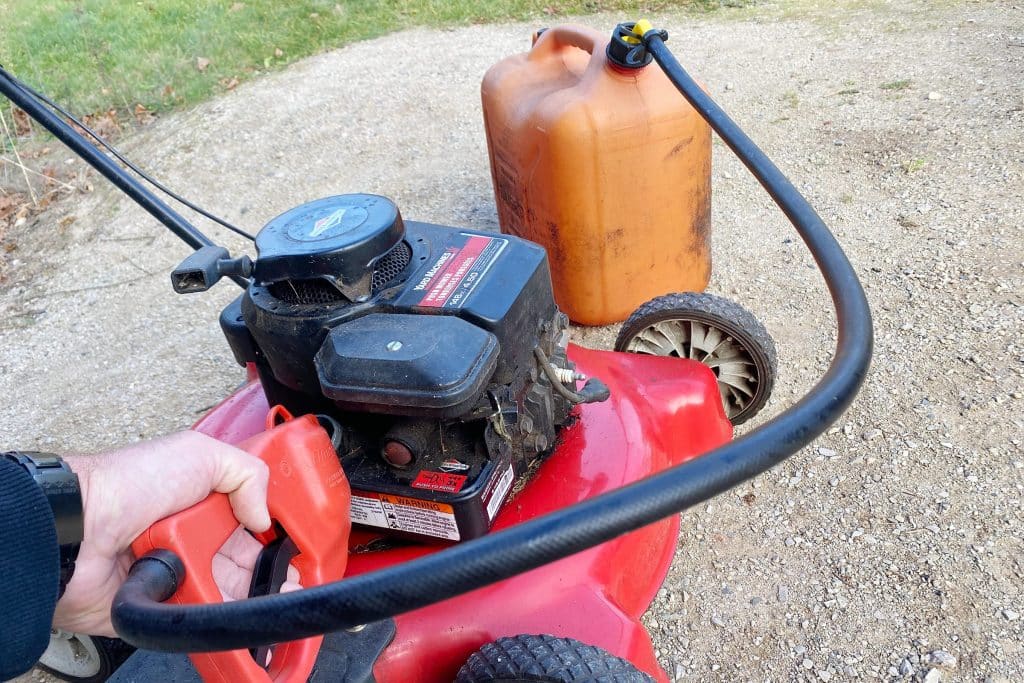
Draining gas from a lawn mower is a straightforward task. It is essential for maintenance and storage.
Regularly draining your lawn mower’s gas prevents engine problems. Old gas can cause damage and reduce efficiency. This guide will help you drain the gas safely and easily. Proper maintenance ensures your lawn mower lasts longer. Learn how to do it right and keep your mower in top shape.
Ready to get started? Let’s dive in.
Preparation
Draining gas from your lawn mower is an important maintenance task. Proper preparation ensures the job is done safely and efficiently. Begin by gathering necessary tools and following safety measures.
Safety Measures
Always work in a well-ventilated area. Gas fumes are dangerous in enclosed spaces. Wear protective gloves to avoid skin contact with gasoline. Keep a fire extinguisher nearby in case of emergencies. Ensure the lawn mower is turned off and the spark plug is disconnected. This prevents accidental starts.
Required Tools
You’ll need a few basic tools for this task. A siphon pump is essential for removing gas. Have a clean, approved gas container ready to store the drained fuel. Use a pair of pliers to remove fuel lines if needed. Keep a rag or towel handy for any spills.
Locating The Fuel Tank
Locating the fuel tank on your lawn mower is the first step in draining the gas. Understanding where the fuel tank is will make the process smoother and safer. This guide will help you identify the fuel tank using two methods: referring to the mower manual and conducting a visual inspection.
Mower Manual
Your lawn mower’s manual is a valuable resource. It provides detailed information about the mower’s parts and their locations. Check the table of contents or index for sections related to the fuel tank. The manual often includes diagrams that show the exact position of the fuel tank.
If you have lost the manual, visit the manufacturer’s website. Many companies provide downloadable versions of their manuals. Having the manual on hand will make locating the fuel tank much easier.
Visual Inspection
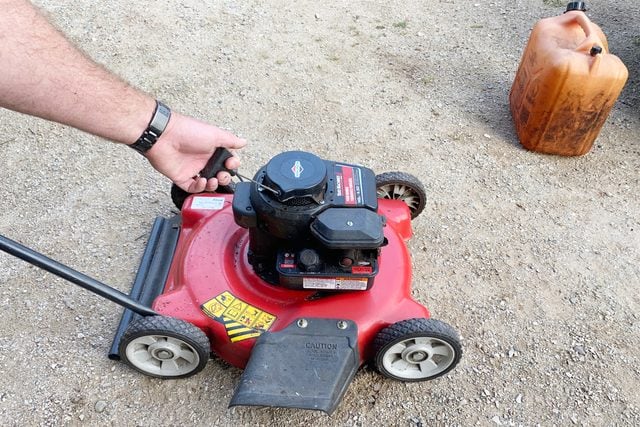
If you do not have a manual, a visual inspection can help. Start by placing the mower on a flat surface. Ensure the engine is cool before you begin. Look for a plastic or metal tank, usually near the back or side of the mower. The fuel tank is often next to the engine and has a cap on top.
Inspect the mower carefully. Some models may have the fuel tank hidden under a cover. Remove any covers or panels if necessary. Once you locate the fuel tank, you are ready to move to the next step in draining the gas.
Disconnecting The Spark Plug
Before you drain gas from your lawn mower, disconnecting the spark plug is crucial. This step ensures safety and prevents the engine from accidentally starting. A small mistake can lead to serious injury. Pay close attention to this step to avoid any risks.
Why It’s Important
Disconnecting the spark plug eliminates the chance of the engine starting accidentally. This precaution is vital for your safety. A running engine can cause the blades to move. This can lead to severe injuries. Always disconnect the spark plug before any maintenance work. It’s a simple yet essential step.
How To Disconnect
First, locate the spark plug on your lawn mower. It’s usually near the front or side of the engine. Once found, grab the rubber cap attached to it. Pull the cap off gently but firmly. Do not yank it out forcefully. This can damage the wire or the spark plug itself.
After removing the cap, inspect the spark plug. Ensure it’s clean and intact. If it’s dirty or damaged, consider replacing it. Keeping the spark plug in good condition helps maintain your lawn mower’s performance. Now, you’re ready to safely drain the gas from your lawn mower.
Draining The Gas
Draining gas from your lawn mower is a vital task. It helps maintain the mower’s efficiency. Leaving old gas can cause issues. The gas can get stale and clog the carburetor. Follow these steps to drain the gas and keep your mower in top shape.
Using A Siphon Pump
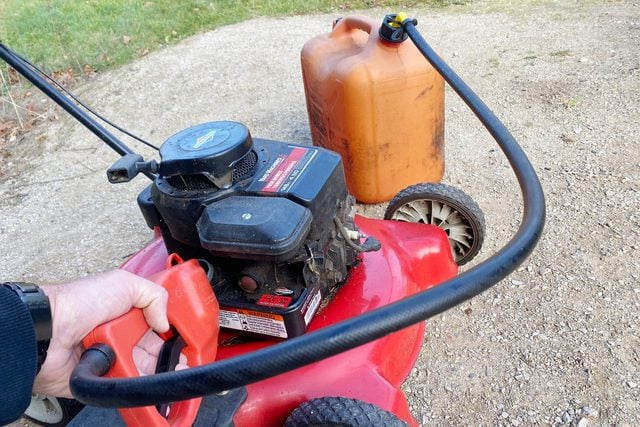
A siphon pump makes draining gas easy. First, place your mower on a flat surface. Ensure it’s turned off and cool. Next, insert the siphon pump hose into the gas tank. Place the other end in a gas can. Pump the siphon to start the flow. The gas will transfer to the can. This method is quick and clean.
Manual Draining Method
You can also drain gas manually. This method needs a bit more effort. First, ensure the mower is off and cool. Locate the gas tank and remove the cap. Use a clean, empty container for the gas. Tilt the mower to pour the gas out. Be careful not to spill. Once the tank is empty, clean any spills. This method works well if you don’t have a siphon pump.
Handling Old Fuel
Draining gas from a lawn mower involves removing old fuel to keep it running smoothly. Use a siphon pump to transfer gas into a container. Always work in a well-ventilated area and dispose of old fuel properly.
Draining old fuel from your lawn mower is crucial. Old fuel can damage the engine. It can also cause the mower to run poorly. Proper handling of this fuel ensures safety and protects the environment.Proper Disposal
Dispose of old fuel responsibly. Do not pour it on the ground. This can harm plants and animals. Instead, take it to a hazardous waste facility. These facilities handle chemicals and fuels safely.Recycling Options
Consider recycling old fuel. Some centers recycle fuel for reuse. Contact local recycling programs for information. They can guide you on how to recycle it properly. This helps reduce waste and protect the planet. “`Cleaning The Fuel Tank
Cleaning the fuel tank of your lawn mower is essential for its maintenance. A clean fuel tank ensures better performance and prolongs the mower’s life. The process involves a few steps that are easy to follow. Let’s dive into the steps for cleaning the fuel tank.
Removing Residue
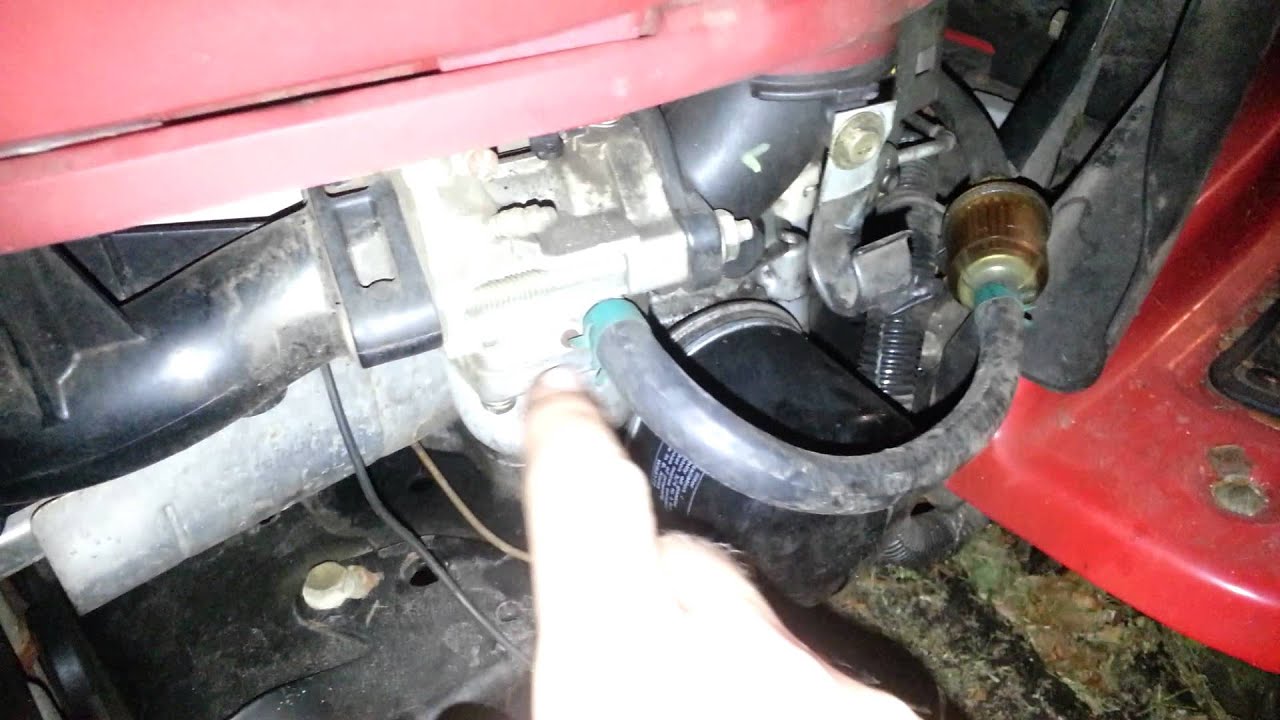
Start by removing any leftover gas from the fuel tank. Use a siphon pump to empty the tank completely. Pour the old fuel into a suitable container for proper disposal. After draining the gas, check for any residue inside the tank. Dirt and debris can clog the fuel system and harm the engine.
Use a clean cloth to wipe the inside of the tank. For stubborn residue, use a fuel tank cleaner or a mixture of water and soap. Rinse the tank thoroughly to remove any cleaning agents. Ensure the tank is completely dry before refilling it with fresh gas.
Inspecting For Damage
After cleaning, inspect the fuel tank for any damage. Look for cracks, holes, or any signs of wear. A damaged fuel tank can cause leaks and pose safety risks. If you find any damage, consider replacing the tank or repairing it if possible.
Check the fuel lines connected to the tank as well. Ensure they are free from cracks or leaks. Replacing worn-out fuel lines helps maintain the mower’s efficiency. Regular inspection and maintenance can save you from costly repairs in the future.
Reconnecting The Spark Plug
Reconnecting the spark plug is a crucial step after draining gas from your lawn mower. This step ensures your mower starts and runs efficiently. A properly connected spark plug means the engine will ignite the fuel correctly. Let’s go through the steps to reconnect the spark plug.
Ensuring Proper Connection
First, locate the spark plug wire. It’s a thick wire leading to the engine. Make sure the wire and the spark plug are clean and free of debris. Dirt can interfere with the connection. Align the spark plug wire with the spark plug. Push the wire onto the plug firmly. You should hear a click when it is secure.
Testing The Mower
Once the spark plug is reconnected, it’s time to test the mower. Move the mower to a safe area. Make sure there is no gas spill. Hold the handle and pull the starter cord. The engine should start smoothly. If it doesn’t, recheck the spark plug connection. A loose connection can prevent the engine from starting.
Testing ensures everything is in place. It confirms the spark plug is working. Your mower is now ready to tackle the lawn. Happy mowing!
Maintenance Tips
Regular maintenance of your lawn mower is crucial for its longevity. One key aspect is draining the gas correctly. This ensures smooth operation and helps avoid engine problems. Below are some essential maintenance tips for draining gas from your lawn mower.
Regular Fuel Checks
It’s important to check the fuel level in your lawn mower regularly. This helps in keeping the engine clean and efficient.
- Inspect the fuel tank: Open the fuel cap and look inside.
- Check for debris: Remove any dirt or grass clippings.
- Top off the fuel: If needed, add fresh gasoline. Use a funnel to avoid spills.
Long-term Storage Preparation
If you plan to store your lawn mower for an extended period, draining the gas is essential.
- Run the engine: Let it run until it uses up all the fuel.
- Remove the remaining gas: Use a siphon pump to drain any leftover fuel.
- Clean the tank: Wipe the inside of the tank with a clean cloth.
By following these maintenance tips, you can keep your lawn mower in top condition. Regular checks and proper storage can help avoid engine issues and ensure your equipment lasts longer.
Frequently Asked Questions
How To Safely Drain Gas From A Lawn Mower?
To safely drain gas, first disconnect the spark plug. Then, use a siphon pump to remove the gas. Dispose of the gas properly.
Can I Use A Siphon To Drain Lawn Mower Gas?
Yes, you can use a siphon pump. It is an effective and easy method for draining gas from your lawn mower.
Why Should I Drain Gas From My Lawn Mower?
Draining gas prevents engine damage and ensures smooth operation. It is especially important before storing the mower for winter.
How Often Should I Drain Gas From My Lawn Mower?
You should drain gas before storing the mower for long periods. It’s recommended before winter storage or if not used for over 30 days.
Conclusion
Draining gas from your lawn mower is essential for maintenance. Follow these simple steps to ensure your mower runs smoothly. First, gather your tools. Next, safely remove the gas. Dispose of it properly. Regular maintenance extends your mower’s life. Also, it saves you money on repairs.
With these tips, your lawn mower will perform better. Always stay safe and handle fuel with care. Keep your lawn looking great with a well-maintained mower. Ready for the next mowing season? Happy mowing!
