
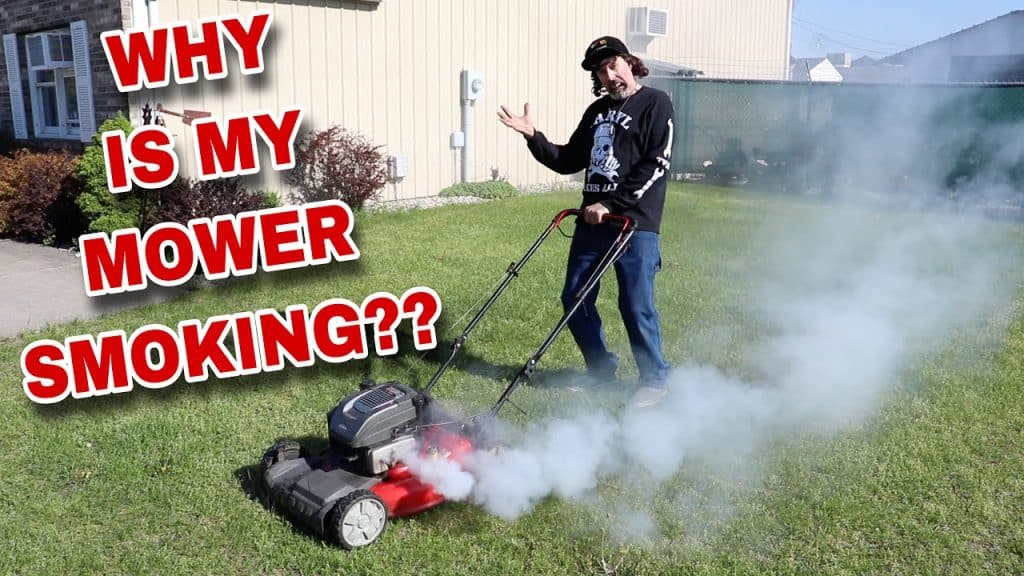
Seeing smoke from your lawn mower can be alarming. It raises immediate concerns.
Smoke from a lawn mower often indicates an underlying issue. Understanding the cause is crucial to prevent further damage. It could be a sign of oil leakage, a clogged air filter, or even an overheating engine. Each possibility requires a different approach for resolution.
Ignoring the smoke can lead to bigger, costlier repairs down the line. This guide will help you identify common reasons for a smoking lawn mower and provide simple solutions. By addressing the problem early, you can keep your mower running smoothly and ensure a healthy lawn. Let’s dive into the common causes and fixes for a smoking lawn mower.
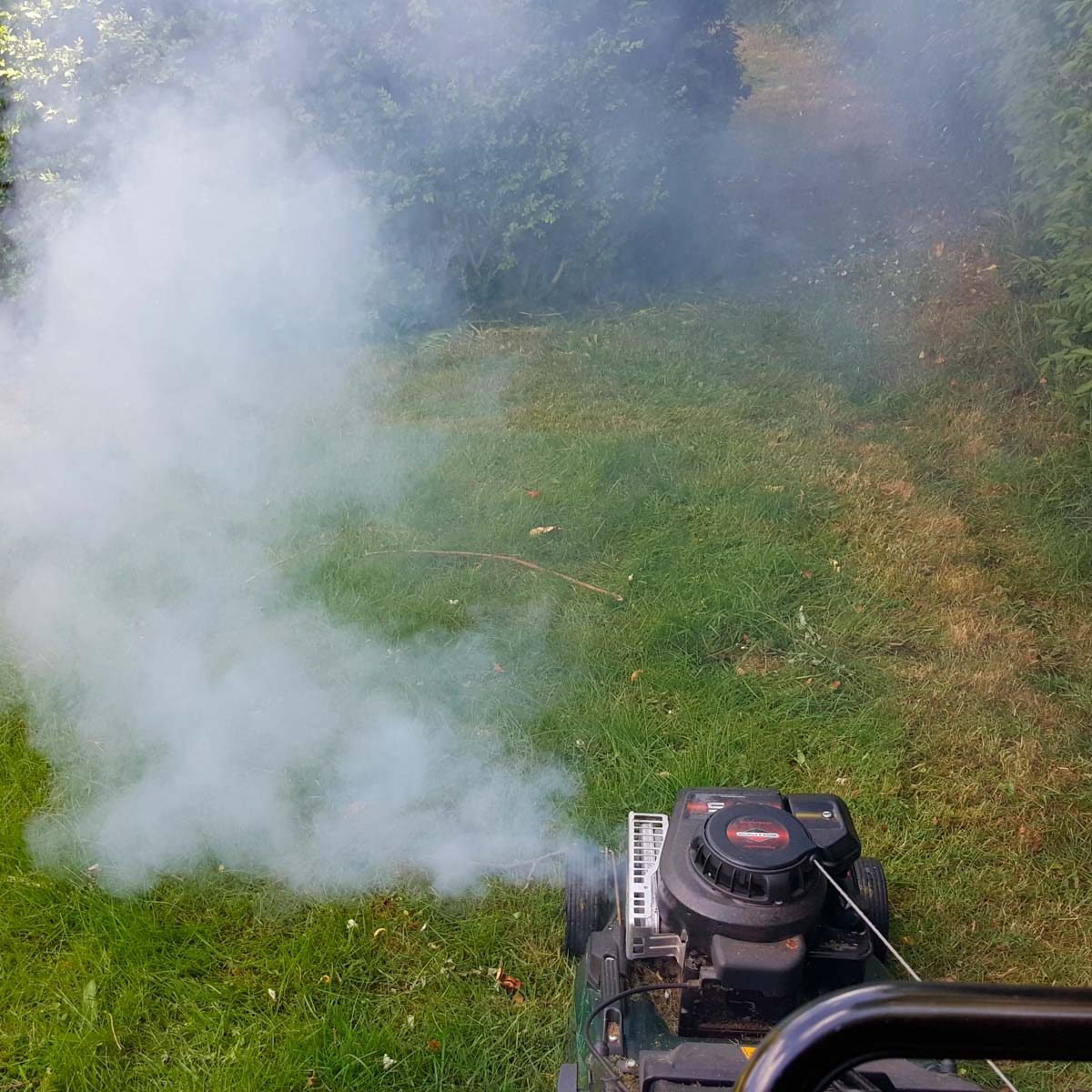
Common Causes Of Lawn Mower Smoking
Seeing your lawn mower smoking can be alarming. Understanding why it smokes is essential to fixing the issue. Let’s explore some common causes of lawn mower smoking.
Oil Spillage
Oil spillage is a frequent cause. If you spill oil when refilling, it might land on the engine. This oil will burn off, causing smoke. Check for any oil leaks or spills.
To prevent this, always use a funnel when adding oil. Wipe any spills immediately.
Clogged Air Filter
A clogged air filter can restrict airflow to the engine. This restriction causes the engine to run rich, burning more fuel and producing smoke. Regularly inspect and clean the air filter.
Replace the filter if it’s too dirty. A clean air filter ensures proper airflow and reduces smoke.
Overheating Issues
Overheating issues can also lead to a smoking lawn mower. Overheating occurs due to low oil levels or a dirty cooling system. Ensure the oil level is sufficient. Regularly clean the cooling fins to allow proper airflow.
Keeping your mower cool helps prevent smoke. Regular maintenance is key.

Types Of Smoke And Their Meanings
Seeing your lawn mower emit smoke can be alarming. Different smoke colors indicate different issues. Identifying the smoke type helps diagnose the problem. Here, we’ll explore what each smoke color means.
White Smoke
White smoke usually indicates oil burning in the engine. This can happen if oil leaks into the combustion chamber. Overfilling the oil or tipping the mower can cause this issue. Check the oil level and ensure it’s correct.
Another cause of white smoke can be a clogged air filter. A dirty filter restricts airflow and causes the engine to burn oil. Regularly clean or replace the air filter to prevent this issue.
Black Smoke
Black smoke signals that the engine is burning too much fuel. This is often a result of a dirty air filter or a carburetor issue. An unclean air filter prevents enough air from mixing with the fuel.
To fix this, clean or replace the air filter. If the problem persists, the carburetor might need adjusting. Incorrect carburetor settings can cause an overly rich fuel mixture.
Blue Smoke
Blue smoke is a sign of burning oil. This could indicate worn engine parts or a damaged seal. Oil entering the combustion chamber is a common cause.
Check the oil level and inspect for leaks. If blue smoke continues, the engine might need a professional inspection. Worn piston rings or valve seals are often the culprits.
Diagnosing The Problem
Seeing your lawn mower smoke can be alarming. But don’t worry! Understanding the cause can help. Here are some steps to diagnose the problem.
Inspecting The Air Filter
The air filter is a common culprit. A clogged air filter restricts airflow. This can cause the engine to smoke.
To inspect the air filter, follow these steps:
- Turn off the lawn mower and let it cool.
- Locate the air filter cover and remove it.
- Take out the air filter and inspect it.
If the filter is dirty, clean or replace it. A clean air filter ensures proper airflow. This can reduce smoke from the engine.
Checking The Oil Level
Oil level is another important factor. Too much or too little oil can cause smoke.
To check the oil level, follow these steps:
- Place the mower on a level surface.
- Locate the oil dipstick and remove it.
- Wipe the dipstick clean and reinsert it.
- Remove the dipstick again and check the oil level.
The oil level should be between the full and add marks. If it’s too high or low, adjust it accordingly. Proper oil level helps the engine run smoothly.
Examining The Spark Plug
A faulty spark plug can also cause smoke. Inspecting the spark plug is easy.
Here’s how to examine the spark plug:
- Turn off the mower and let it cool.
- Locate the spark plug and remove the wire.
- Use a spark plug wrench to remove the spark plug.
- Check the spark plug for damage or buildup.
If the spark plug is dirty, clean it. If damaged, replace it. A good spark plug ensures proper combustion and reduces smoke.
Preventive Maintenance Tips
Maintaining your lawn mower properly can help prevent it from smoking. Regular maintenance keeps your mower running smoothly. It also extends its lifespan. Below are some key tips to keep your lawn mower in top shape.
Regular Oil Changes
Changing the oil in your lawn mower is essential. Old oil can cause the engine to overheat and produce smoke. Follow these steps to change the oil:
- Warm up the engine for a few minutes.
- Turn off the mower and disconnect the spark plug.
- Place a pan under the oil drain plug.
- Remove the plug and let the oil drain completely.
- Replace the drain plug and refill with fresh oil.
Check your owner’s manual for the recommended oil type and change frequency. Usually, it’s best to change the oil every 50 hours of use.
Cleaning The Air Filter
A dirty air filter can restrict airflow and cause the engine to smoke. Cleaning or replacing it regularly ensures proper airflow. Follow these steps:
- Locate the air filter cover and remove it.
- Take out the air filter and inspect it.
- If it’s dirty, clean it with soap and water or replace it.
- Let the filter dry completely before reinstalling.
- Secure the air filter cover back in place.
Check the air filter every 25 hours of use. Clean or replace it as needed.
Routine Engine Checkups
Regular engine checkups can prevent many issues. Inspect the engine for leaks, loose parts, or wear. Follow these steps for a basic checkup:
- Disconnect the spark plug for safety.
- Check for oil or fuel leaks around the engine.
- Inspect belts and cables for wear or damage.
- Tighten any loose bolts or screws.
- Reconnect the spark plug and test the engine.
Perform these checkups every few months. Addressing small issues early can prevent serious problems later.
By following these preventive maintenance tips, you can keep your lawn mower running smoothly and smoke-free. Regular upkeep not only prevents smoke but also extends the life of your mower.
Safe Operation Practices
A smoking lawn mower may indicate oil leaks, clogged filters, or engine issues. Ensure regular maintenance and proper oil levels to prevent this problem. Always operate your mower safely to avoid damage and ensure longevity.
Operating a lawn mower requires attention to safety to prevent smoking issues. Following proper practices ensures your mower runs smoothly and lasts longer. Let’s explore some key safe operation practices.Proper Fuel Handling
Always use the right type of fuel for your lawn mower. Check the owner’s manual for fuel recommendations. Store fuel in a clean, sealed container. Avoid using fuel that is older than 30 days. Old fuel can cause engine problems and smoking.Correct Mowing Techniques
Mow your lawn when it is dry. Wet grass can clog the mower and cause it to smoke. Cut the grass at the recommended height. Cutting too low can stress the engine. Regularly sharpen the mower blades. Dull blades make the engine work harder.Avoiding Engine Overload
Do not force the mower through thick or tall grass. Slow down or make multiple passes if needed. Avoid mowing over debris like sticks or rocks. These can damage the engine. Keep the air filter clean to ensure proper airflow. A dirty filter can lead to engine overload and smoking. “`When To Seek Professional Help
Seeing smoke from your lawn mower can be troubling. Sometimes, the solution is simple. But in other cases, you may need a professional. Knowing when to seek expert help can save time and prevent damage.
Persistent Smoke Issues
If your lawn mower keeps smoking after basic troubleshooting, it’s a problem. Persistent smoke can mean serious issues. A professional can diagnose and fix the problem. Don’t ignore ongoing smoke. It could harm your mower.
Unusual Engine Noises
Unusual noises mean trouble. Grinding or knocking sounds need expert attention. These noises often signal deeper mechanical problems. Ignoring them can lead to engine failure. A professional can identify the source and fix it.
Complex Repairs
Some repairs need more than basic tools. If you feel overwhelmed, call a professional. They have the skills and tools for complex issues. Attempting complicated repairs on your own can cause more damage. Let experts handle it for the best outcome.
Choosing The Right Lawn Mower Oil
Your lawn mower’s performance depends on the oil you use. Using the wrong oil can cause problems, including smoking. Let’s explore the different types of oil, how to change it, and the role of oil additives.
Types Of Lawn Mower Oil
There are different types of oil suitable for lawn mowers. The most common are:
| Type of Oil | Best For |
|---|---|
| SAE 30 | Warmer climates |
| SAE 10W-30 | Variable temperatures |
| SAE 5W-30 | Cold weather |
| Full Synthetic | High-performance engines |
Using the right type of oil ensures that your lawn mower runs smoothly. It also helps prevent smoking and other issues.
How To Change Oil
Changing the oil in your lawn mower is simple. Follow these steps:
- Warm up the engine for a few minutes.
- Turn off the mower and disconnect the spark plug.
- Drain the old oil into a suitable container.
- Replace the oil filter if your mower has one.
- Refill with the correct type and amount of oil.
- Reconnect the spark plug and run the engine for a few minutes.
Regular oil changes keep your lawn mower in top condition.
Oil Additives
Oil additives can enhance the performance of your lawn mower. Some common additives include:
- Detergents: Clean engine deposits.
- Anti-wear agents: Reduce friction.
- Corrosion inhibitors: Prevent rust.
- Viscosity improvers: Ensure consistent oil flow.
Using the right additives can prolong the life of your mower. They also help maintain optimal performance.
Environmental And Health Considerations
When your lawn mower starts smoking, it’s essential to think about more than just repairs. The smoke can have significant environmental and health implications. Understanding these effects helps you take better care of your equipment and environment.
Impact Of Smoke On Health
Smoke from a lawn mower can cause breathing issues. It contains harmful particles that enter your lungs. Prolonged exposure may lead to serious conditions like asthma or bronchitis. Children and elderly people are especially at risk.
Environmental Effects
Smoke from lawn mowers can damage the environment. It releases pollutants into the air. These pollutants contribute to air pollution and climate change. They also harm plants and animals in your garden.
Eco-friendly Alternatives
Consider using eco-friendly lawn mowers. Electric mowers produce no smoke. They are better for the environment and your health. Another option is using manual push mowers. These do not use fuel and are completely smoke-free.
Here’s a quick comparison of different lawn mowers:
| Type | Smoke Emission | Environmental Impact |
|---|---|---|
| Gasoline | High | Negative |
| Electric | None | Positive |
| Manual Push | None | Very Positive |
Switching to eco-friendly lawn mowers is a simple way to reduce smoke. It’s beneficial for both your health and the environment.

Frequently Asked Questions
Why Is My Lawn Mower Smoking?
Your lawn mower may be smoking due to oil spillage, a clogged air filter, or worn-out engine parts. Ensure you check and maintain these components regularly.
Is White Smoke From Lawn Mower Normal?
White smoke usually indicates burning oil. Check for oil leaks, overfilled oil, or engine damage. Addressing these issues can prevent further damage.
Can Overfilling Oil Cause Lawn Mower To Smoke?
Yes, overfilling oil can cause the lawn mower to smoke. Excess oil can enter the combustion chamber, leading to smoke. Always maintain the correct oil level.
How Do I Fix A Smoking Lawn Mower?
To fix a smoking lawn mower, check for oil leaks, clean the air filter, and ensure proper oil levels. Regular maintenance helps avoid smoking issues.
Conclusion
Identifying why your lawn mower is smoking is crucial. Address issues promptly. Regular maintenance helps prevent problems. Check oil levels, air filters, and spark plugs. Clean the mower deck and blades. Avoid overloading the mower. Store it properly during off-seasons.
These simple steps can keep your lawn mower running smoothly. If problems persist, consult a professional. Regular care ensures a well-maintained lawn and a longer-lasting mower. Keep these tips in mind for a hassle-free mowing experience.
