
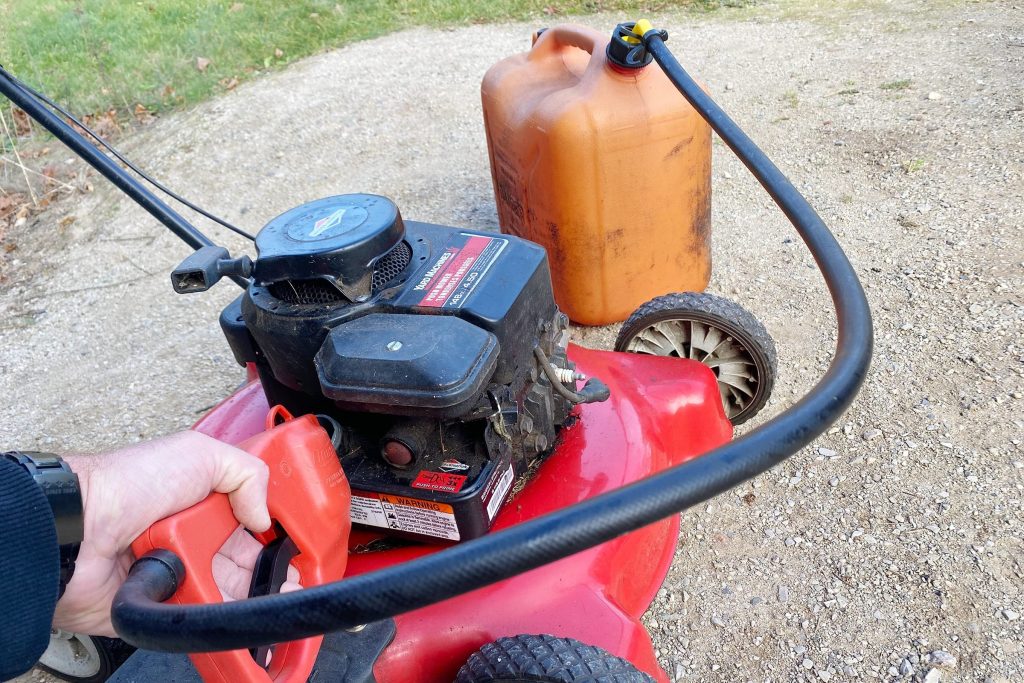
Draining gas from a lawn mower is crucial for maintenance. It prevents issues like stale fuel and engine problems.
Regularly draining your lawn mower’s gas can extend its life and ensure smooth operation. Old gas can cause clogs and make starting the engine difficult. Whether you’re preparing your mower for winter storage or just performing routine maintenance, knowing how to properly drain the gas is essential.
This guide will walk you through the steps to safely and efficiently drain the fuel from your mower. By following these instructions, you can keep your lawn mower in top condition and avoid costly repairs. Stay tuned to learn the best methods for draining your lawn mower gas.
Preparation
Before you drain the gas from your lawn mower, you need to prepare properly. This step ensures the process goes smoothly and safely. Follow these steps to get ready.
Gather Necessary Tools
First, collect all the tools you will need. This will save time and make the process easier. Here is a list of essential tools:
- Gas container – Use an approved container for storing gasoline.
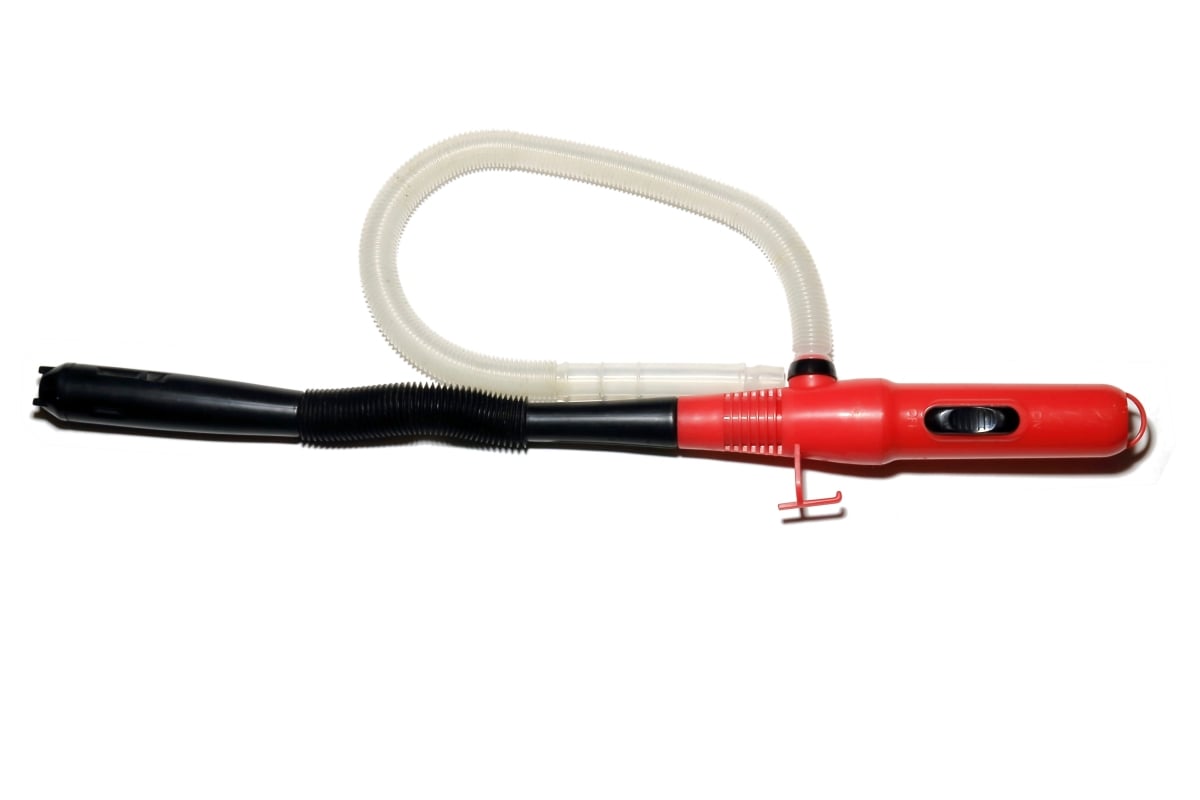
- Hand pump or siphon – This helps transfer gas from the tank.
- Rag or cloth – Use this to clean up any spills.
- Wrench or screwdriver – Needed for opening the mower’s gas tank.
Ensure Safety Measures
Safety should always come first. Here are some safety measures to follow:
- Work outdoors or in a well-ventilated area – Gas fumes can be harmful.
- Wear gloves and safety glasses – Protect your skin and eyes.
- Keep a fire extinguisher nearby – Gas is highly flammable.
- Avoid open flames or sparks – Do not smoke near the mower.
Being prepared ensures a smooth and safe gas draining process. Follow these steps to make sure you are ready.
Locate The Fuel Tank
Draining the gas from your lawn mower is a crucial task. First, locate the fuel tank. This step ensures you know where to access the gasoline. Most lawn mowers have a visible fuel tank. It’s usually near the engine. This will make it easier to perform the task.
Identify The Fuel Cap
Next, identify the fuel cap on your lawn mower. The fuel cap covers the opening of the fuel tank. It is usually round and made of plastic or metal. Look for a cap with a fuel symbol or the word “fuel” on it. Unscrew the cap to access the gasoline inside the tank.
Check For Any Leaks
Before draining the gas, check for any leaks. Examine the area around the fuel tank. Look for any signs of gas leakage. This ensures safety during the draining process. If you see leaks, address them before proceeding. Safety first!
Disconnect The Spark Plug
Before draining the gas from your lawn mower, it’s crucial to disconnect the spark plug. This ensures safety and prevents any accidental starts while you’re working on the mower. Follow these steps to disconnect the spark plug properly.
Locate The Spark Plug
First, find the spark plug on your lawn mower. It is usually located on the side or front of the engine. Look for a small, cylindrical component with a thick wire attached to it. Refer to your mower’s manual if you’re having trouble.
Remove The Spark Plug Wire
Once you have found the spark plug, carefully grab the rubber boot at the end of the wire. Gently pull it off the spark plug. Avoid tugging the wire itself to prevent damage. Ensure the wire is completely disconnected before proceeding with gas draining.
Drain The Gas Tank
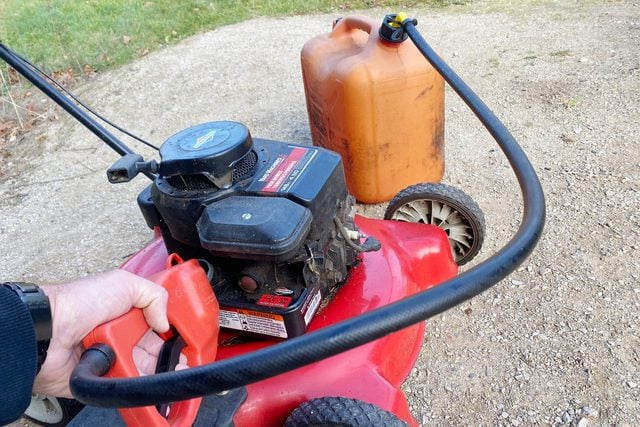
Draining the gas tank of your lawn mower is essential for maintenance. It prevents stale fuel from damaging the engine. There are two effective methods to drain the gas tank. You can use a siphon pump or drain directly from the tank.
Use A Siphon Pump
A siphon pump is a handy tool for draining gas. It makes the process quick and easy. Follow these steps:
- Place the mower on a flat surface.
- Insert the siphon pump tube into the gas tank.
- Ensure the other end of the tube is in a gas can.
- Start pumping to transfer the gas.
A siphon pump minimizes spillage. It is safe and efficient. Always wear gloves for protection.
Drain Directly From The Tank
Draining directly from the tank is another option. It requires careful handling. Here’s how to do it:
- Locate the fuel line at the bottom of the tank.
- Use pliers to detach the fuel line.
- Place a gas can underneath the tank.
- Allow the gas to flow into the can.
This method can be messy. Ensure you have rags to clean any spills. Always work in a well-ventilated area.
Both methods have their benefits. Choose the one that suits your needs. Proper maintenance extends the life of your lawn mower.
Dispose Of Old Gas
Once you have drained the gas from your lawn mower, it is important to dispose of it properly. Old gas can be hazardous and harmful to the environment. Simply dumping it on the ground or in the trash is not an option. Follow these steps to ensure safe and responsible disposal.
Find A Disposal Site
Look for a local disposal site that accepts old gas. Many communities have designated areas for hazardous waste. Check with your local waste management facility or recycling center. They often have information on where you can take old gas. You can also search online for disposal sites near you.
Transport The Gas Safely
Use a certified gas container to transport the old gas. Ensure the container is tightly sealed to prevent leaks. Place the container in the trunk of your car or the bed of your truck. Secure it to avoid spills during transportation. Drive carefully to the disposal site. Avoid sudden stops and sharp turns.
Clean The Fuel System
Maintaining a clean fuel system is crucial for your lawn mower’s performance. Dirty fuel systems can lead to clogs, poor engine performance, and increased fuel consumption. Regularly cleaning and inspecting the fuel system ensures your lawn mower runs smoothly and efficiently.
Inspect The Fuel Filter
The fuel filter prevents dirt and debris from entering the engine. Over time, it can become clogged, affecting fuel flow. Here’s how you can inspect and clean it:
- Locate the fuel filter, usually found along the fuel line.
- Disconnect the fuel line from the filter using a pair of pliers.
- Remove the filter and inspect it for debris and blockage.
- Clean the filter with a fuel system cleaner or replace it if necessary.
Clean The Carburetor
The carburetor mixes air and fuel for the engine. A dirty carburetor can cause starting issues and poor performance. Follow these steps to clean it:
- Turn off the lawn mower and remove the air filter cover.
- Locate the carburetor and remove any dirt or debris around it.
- Use a carburetor cleaner spray to clean the inside and outside of the carburetor.
- Check the carburetor bowl for any fuel residue and clean it if needed.
- Reassemble the carburetor and air filter cover.
Regularly cleaning the fuel system helps maintain your lawn mower’s efficiency. It ensures a longer lifespan for your equipment.
Reconnect The Spark Plug
After draining the gas from your lawn mower, it’s crucial to reconnect the spark plug. This step ensures that your mower is ready to run efficiently. Neglecting this can lead to startup issues or even damage to your mower.
Reattach The Spark Plug Wire
First, locate the spark plug wire. It usually sits near the engine. Gently grab the wire’s boot, not the wire itself. Firmly push the boot onto the spark plug. You might hear a click, indicating it’s attached properly.
Ensure A Secure Connection
Check that the connection is tight. Wiggle the boot slightly. It should not come off easily. A loose connection can cause misfires. This can damage your engine over time. A secure spark plug ensures smooth operation and better performance.
Refill With Fresh Gas
Refilling your lawn mower with fresh gas is crucial after draining the old fuel. Using the right gasoline ensures smooth operation and prolongs the life of your mower. Follow these steps to refill your tank properly and keep your equipment running efficiently.
Choose The Right Gasoline
Always use fresh gasoline for your lawn mower. Stale fuel can cause engine problems. For most mowers, regular unleaded gasoline with an octane rating of 87 or higher is suitable. Avoid gasoline with more than 10% ethanol as it can damage small engines. Refer to your mower’s manual for specific recommendations.
Fill The Tank Properly
Before refueling, ensure the mower is turned off and on a level surface. Use a clean, approved container to pour the gasoline. Follow these steps:
- Open the fuel cap carefully to avoid spills.
- Insert the fuel nozzle or funnel into the tank opening.
- Pour the gasoline slowly to prevent overflow.
- Fill the tank up to the recommended level, usually marked on the tank.
- Securely tighten the fuel cap after filling.
By following these steps, you ensure your lawn mower runs efficiently. Proper maintenance and using fresh gas can extend the life of your equipment.
Test The Lawn Mower
Testing the lawn mower after draining the gas is crucial. It helps ensure everything works correctly. This step can prevent potential issues later. Follow these simple steps to test your lawn mower effectively.
Start The Engine
First, make sure the lawn mower is on a flat surface. This ensures stability. Next, locate the mower’s ignition switch. Turn the switch to the “on” position. Pull the starter cord firmly. The engine should start smoothly. Listen for unusual sounds. They can indicate issues. Let the engine run for a few minutes. This helps to burn any remaining fuel.
Check For Any Issues
With the engine running, inspect the mower. Look for fuel leaks. Check the fuel lines and connections. Ensure they are secure. Look at the oil level. It should be at the correct mark. If not, add oil as needed. Check the air filter. It should be clean and free of debris. Replace it if necessary.
Next, examine the spark plug. It should be clean and properly connected. Tighten it if it is loose. Check the mower blades. They should be sharp and securely attached. If they are dull, sharpen or replace them. Finally, listen to the engine. It should run smoothly without sputtering or stalling. If you notice any problems, address them before using the mower again.
Frequently Asked Questions
How Do I Safely Drain Lawn Mower Gas?
To safely drain lawn mower gas, use a siphon pump. Place one end in the tank and the other in a gas container. Ensure the mower is cool and work in a well-ventilated area.
Why Should I Drain Gas From My Lawn Mower?
Draining gas prevents stale fuel and carburetor clogs. It ensures optimal performance and extends the mower’s lifespan.
Can I Reuse Drained Lawn Mower Gas?
Avoid reusing drained gas. Stale or contaminated gas can harm your mower’s engine and reduce efficiency.
How Often Should I Drain Lawn Mower Gas?
Drain gas at the end of each mowing season. It helps maintain the mower and prevents engine issues.
Conclusion
Draining lawn mower gas is simple with the right steps. Always start by ensuring the mower is off. Use a siphon pump for safe fuel removal. Store the gas properly to avoid hazards. Regular maintenance like this keeps your mower running smoothly.
Safety first. Follow these tips to extend your mower’s life. Happy mowing!
