
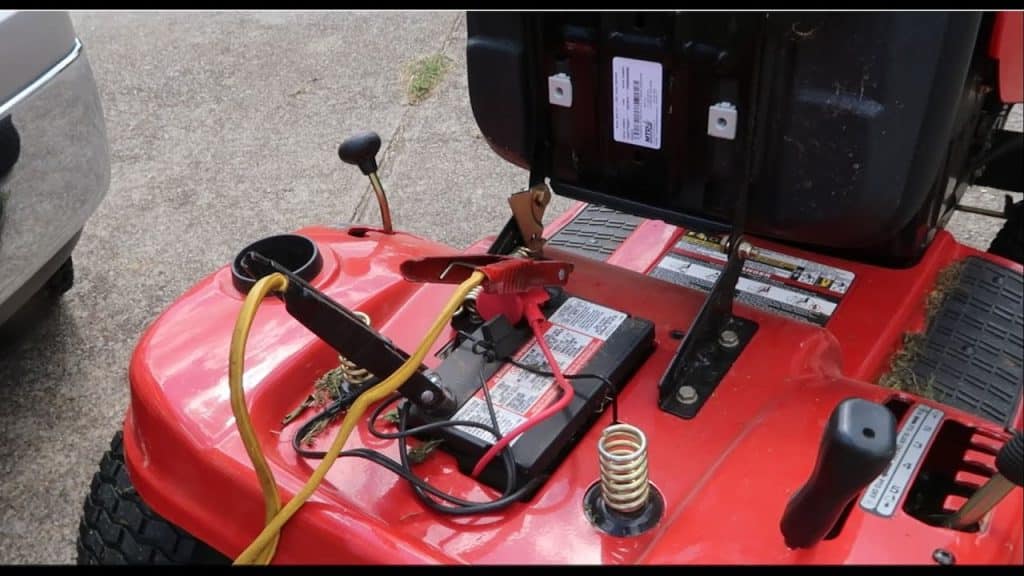
Yes, you can jump a lawn mower battery. It’s similar to jumping a car battery.
But there are important steps to follow to do it safely. Have you ever found your lawn mower battery dead just when you need it the most? It’s a common problem, especially after long periods of disuse. Jumping a lawn mower battery can save the day.
But you need to know the right way to do it. This guide will walk you through the process, ensuring you can get your mower running again quickly and safely. Let’s dive into the details and get your lawn mower back in action.

Safety Precautions
Jumping a lawn mower battery can be dangerous if not done properly. It’s important to follow safety precautions to avoid injuries or accidents. In this section, we will discuss some essential safety tips to keep in mind before you jump-start your lawn mower battery.
Wear Protective Gear
Always wear the right protective gear to stay safe. This includes:
- Safety glasses to protect your eyes from sparks or battery acid.
- Gloves to protect your hands from electric shock or acid burns.
- Long sleeves to shield your arms from any potential splashes or sparks.
Check Battery Condition
Inspect the battery before attempting to jump-start it. Follow these steps:
- Look for damage: Check for cracks, leaks, or other visible damage.
- Clean terminals: Ensure the battery terminals are clean and free of corrosion.
- Check electrolyte levels: If the battery is not sealed, make sure the electrolyte levels are adequate.
Using a damaged or leaking battery can be very dangerous. If you find any issues, replace the battery instead of jumping it.
| Protective Gear | Purpose |
|---|---|
| Safety Glasses | Protect eyes from sparks and acid |
| Gloves | Shield hands from shock and burns |
| Long Sleeves | Guard arms against splashes and sparks |
Required Tools
Jumping a lawn mower battery can save time and money. Understanding the required tools is crucial for a successful jumpstart. You need the right equipment to avoid damaging your mower or causing injuries. Here, we outline the essential tools you will need.
Jumper Cables
First, you need a pair of jumper cables. These cables should be heavy-duty and long enough to reach between the two batteries. Make sure the cables have strong alligator clips for a secure connection. Using high-quality cables ensures a steady flow of electricity.
Compatible Battery
You also need a compatible battery to jump your lawn mower. This battery should have a similar voltage and amperage rating to your mower’s battery. Using an incompatible battery can cause damage. Verify the specifications of both batteries before proceeding.
| Tool | Specifications |
|---|---|
| Jumper Cables | Heavy-duty, long enough, strong alligator clips |
| Compatible Battery | Same voltage and amperage rating |
With the right tools, you can safely jumpstart your lawn mower. Always prioritize safety and double-check your equipment.
Preparing The Lawn Mower
Jumping a lawn mower battery requires proper preparation. Ensuring your lawn mower is ready for the task is crucial. Follow these simple steps to prepare your lawn mower for a safe and successful battery jump.
Turn Off Engine
First, turn off the engine of your lawn mower. This step is vital to prevent any accidents.
- Ensure the key is removed from the ignition.
- Wait a few minutes for the engine to cool down.
Locate The Battery
Next, locate the battery on your lawn mower. The battery is usually under the seat or the hood.
- Check the user manual for the exact location.
- Inspect the battery for any visible damage.
Once you have located the battery, you can proceed with the next steps to jump it. Ensuring the battery is easily accessible will make the process smoother and safer.

Connecting Jumper Cables
Connecting jumper cables to a lawn mower battery can be a straightforward task if you follow the correct steps. Proper connection of the cables ensures a safe and efficient jump-start. Below are the detailed steps to attach the positive and negative cables correctly.
Attach Positive Cable
First, locate the positive terminal on the lawn mower battery. This terminal is usually marked with a “+” symbol or a red cover. Ensure the lawn mower is turned off. Take the red jumper cable and clamp it securely to the positive terminal of the lawn mower battery.
Next, connect the other end of the red jumper cable to the positive terminal of the live battery source. This could be a car battery or another fully charged battery. Ensure the connection is secure to prevent any electrical issues.
Attach Negative Cable
Now, locate the negative terminal on the live battery source. This terminal is marked with a “-” symbol or a black cover. Take the black jumper cable and clamp it securely to the negative terminal of the live battery source.
Finally, connect the other end of the black jumper cable to an unpainted metal surface on the lawn mower. This could be a bolt or the engine block. Avoid connecting it directly to the negative terminal of the lawn mower battery to prevent sparking.
Starting The Lawn Mower
Trying to start a lawn mower with a dead battery can be frustrating. But, you can jump-start it with ease. Follow these steps to get your mower running smoothly.
Turn On The Mower
First, make sure the battery connections are secure. Check that the cables are tightly attached to the battery terminals. This ensures a good connection.
Next, turn the key in the ignition. Listen for the engine to start. If it doesn’t start, check the battery again. You might need to adjust the cables.
Monitor The Battery
Once the mower is running, keep an eye on the battery. Make sure it charges properly. You can use a voltmeter to check the voltage. A healthy battery should read around 12.6 volts or higher.
If the battery is not charging, you may have a problem. Look for loose connections or corrosion on the terminals. Clean the terminals if needed.
Here is a simple table to check the battery voltage:
| Battery Voltage | Status |
|---|---|
| 12.6V or higher | Fully Charged |
| 12.4V – 12.6V | Partially Charged |
| Below 12.4V | Needs Charging |
Always monitor your battery’s health. This will ensure your lawn mower is ready to go when you need it.
Disconnecting Jumper Cables
Disconnecting jumper cables from a lawn mower battery is a straightforward process. It ensures safety and prolongs battery life. Always follow these steps carefully to avoid any mishaps.
Remove Negative Cable
The first step is to remove the negative cable. This cable is usually black. It connects to the negative terminal of the battery, marked with a minus (-) sign.
- Turn off the lawn mower and remove the key.
- Wear protective gloves to ensure safety.
- Use a wrench to loosen the nut on the negative terminal.
- Carefully remove the negative cable from the terminal.
Remove Positive Cable
Next, remove the positive cable. This cable is usually red. It connects to the positive terminal, marked with a plus (+) sign.
- Use the same wrench to loosen the nut on the positive terminal.
- Gently remove the positive cable from the terminal.
- Ensure both cables do not touch each other or any metal parts.
By following these simple steps, you can safely disconnect the jumper cables from your lawn mower battery. This process helps in preventing any accidental short circuits.
Post-jump Maintenance
Jumping a lawn mower battery can be tricky. Ensure all connections are secure and the mower is off. Regularly check battery health after the jump.
Jumping a lawn mower battery can be a quick fix. But, to keep your mower running well, you need to perform some post-jump maintenance. This ensures the battery and mower stay in top shape.Check Battery Health
After jumping the battery, check its health. Use a multimeter to measure the voltage. A healthy battery should read between 12.6 and 12.8 volts. If the voltage is below this range, the battery may need charging or replacement. Regular checks help prevent future issues.Clean Battery Terminals
Clean the battery terminals to ensure a good connection. Dirt and corrosion can block the flow of electricity. Use a wire brush to scrub the terminals gently. Apply a mixture of baking soda and water to remove any corrosion. Dry the terminals with a clean cloth. This simple step can improve battery performance. “`
Troubleshooting Tips
Jumping a lawn mower battery can be tricky. Knowing how to troubleshoot common issues can save you time and effort. This guide will help you understand what to look for and when to replace the battery.
Common Issues
Several issues can cause your lawn mower battery to fail. It’s essential to identify these problems early:
- Corroded Terminals: Corrosion can prevent the battery from making a good connection.
- Loose Connections: Loose wires can cause intermittent power loss.
- Old Battery: Batteries lose their ability to hold a charge over time.
- Faulty Charger: Sometimes, the charger itself is the problem.
To troubleshoot, start by checking the battery terminals. Clean any corrosion with a wire brush. Next, ensure all connections are tight. If the battery is old, it might be time for a replacement.
When To Replace The Battery
Knowing when to replace your lawn mower battery is crucial for efficient operation. Here are some signs:
- No Charge: If the battery won’t charge, it might be dead.
- Frequent Jump Starts: Needing to jump the battery often indicates it’s failing.
- Swollen Battery Case: A swollen case is a sign of internal damage.
- Low Voltage: Use a multimeter to check voltage. Low readings mean it’s time for a new battery.
When you notice these signs, it’s best to replace the battery. This ensures your lawn mower runs smoothly and reliably.
Frequently Asked Questions
Can You Jump Start A Lawn Mower Battery?
Yes, you can jump start a lawn mower battery using a car battery or a portable jump starter.
How To Jump A Lawn Mower Battery?
Connect the positive terminals first, then the negative terminals, and start the mower.
Is It Safe To Jump A Lawn Mower Battery?
Yes, it’s safe if done correctly. Ensure both batteries are similar in voltage.
Can A Car Jump A Lawn Mower?
Yes, a car can jump start a lawn mower. Ensure both engines are off.
Conclusion
Jumping a lawn mower battery is possible and practical. Follow the right steps. Ensure safety by wearing gloves and goggles. Use jumper cables correctly. Connect the positive and negative terminals properly. Turn off the mower and the donor vehicle before connecting.
Start the donor vehicle first. Then, start the lawn mower. Disconnect cables in reverse order. Regular maintenance prevents battery issues. Clean terminals and check connections. Charge the battery often. By doing this, you can avoid future troubles.
